5 Ways to Build Mental Grit During the Holidays!
India White • December 18, 2025
5 Ways to Build Mental GRIT

5 Ways to Build Mental Grit During the Holidays
A G.R.I.T. Framework Guide for Leaders, Teachers, Students, and Families
The holiday season is often painted as joyful and light-filled, yet for many people it quietly brings increased stress, emotional strain, financial pressure, and exhaustion. Leaders carry the weight of responsibility, teachers push through end-of-semester demands, students juggle expectations and transitions, and families try to hold everything together while honoring traditions, relationships, and rest.
Mental grit during the holidays is not about forcing positivity or powering through at all costs. It is about enduring wisely. It is about staying grounded, focused, and emotionally regulated even when life feels full. Using the G.R.I.T. framework—Growth Mindset, Resilience, Self-Efficacy, and Time Management—we can approach the holidays with strength that sustains rather than drains.
Below are five practical ways to build mental grit during the holiday season, supported by research and applicable across leadership, education, and family life.
1. Reframe the Season With a Growth Mindset
A growth mindset reminds us that we are not required to get everything “right” to be successful. During the holidays, pressure often comes from perfectionism—perfect gatherings, perfect grades, perfect memories, perfect outcomes. Research on growth mindset, most notably by Carol Dweck, shows that individuals who view challenges as opportunities for learning are more resilient, persistent, and adaptive when plans change or obstacles arise.
Instead of asking, “Did I do this perfectly?” ask,
“What am I learning about myself in this season?”
For leaders, this may mean learning how to delegate more effectively.
For teachers, it may mean learning how to simplify instruction and expectations.
For students, it may mean learning how to manage stress and uncertainty.
For families, it may mean learning how to choose connection over comparison.
Growth mindset allows grace to coexist with effort.
2. Strengthen Resilience Through Healthy Boundaries
Resilience is not endless endurance; it is the ability to recover and return to balance. Psychological research on stress and coping highlights that stress is shaped not only by external demands, but by how individuals appraise those demands and the coping tools they believe they have available.
One of the most powerful resilience tools during the holidays is boundaries.
Healthy boundaries sound like:
• “I can attend, but I will leave early.”
• “I won’t engage in conversations that compromise my peace.”
• “I will protect one evening a week for rest.”
Leaders and teachers, in particular, experience emotional labor during the holidays as they support others while navigating their own responsibilities. Resilience grows when recovery is intentional—through rest, reflection, prayer, movement, or moments of quiet.
Choosing peace is not avoidance; it is strategy.
3. Build Self-Efficacy Through Small, Meaningful Wins
Self-efficacy, introduced by psychologist Albert Bandura, refers to a person’s belief in their ability to successfully execute tasks and handle challenges. Research consistently shows that self-efficacy predicts persistence, motivation, and emotional regulation.
During the holidays, demands can feel overwhelming, which lowers confidence. The fastest way to rebuild self-efficacy is through micro-wins—small, achievable tasks that provide evidence of capability.
Examples include:
• A student completing one focused study session
• A teacher grading one assignment set instead of everything
• A leader completing one strategic priority
• A family organizing one space or planning one meal
Each completed task sends a message to the brain: “I can do hard things.” Confidence grows not from motivation, but from evidence.
4. Use Time Management as a Mental Health Tool
Time management is often discussed as a productivity skill, but research increasingly shows its relationship to reduced stress and improved well-being. When time feels chaotic, the mind feels unsafe. Structure creates calm.
A simple holiday time-management strategy is the GRIT Priority Plan:
• Must-Do: Top three priorities that truly matter
• Nice-to-Do: Optional activities that bring joy
• Not-Doing: Tasks or expectations you are intentionally releasing
Leaders, teachers, students, and families benefit when calendars include buffer time, rest time, and transition time. A schedule is not a restriction—it is protection.
Managing time is managing energy.
5. Practice Recovery With Self-Compassion
Grit without compassion leads to burnout. Research on self-compassion and mindfulness consistently shows reductions in stress, anxiety, and emotional exhaustion when individuals treat themselves with kindness rather than criticism.
Mental grit does not mean ignoring emotions. It means acknowledging them without being controlled by them.
A simple daily reset:
• Inhale slowly for four counts
• Exhale for six counts
• Relax the shoulders
• Repeat a compassionate phrase: “I am doing the best I can with what I have.”
This moment of regulation helps the nervous system reset and supports emotional endurance through demanding seasons.
A Final Word on Holiday Grit
True grit is not loud. It is steady.
It is choosing progress over perfection.
It is protecting peace without guilt.
It is believing you are capable—even when tired.
It is managing time so life doesn’t manage you.
It is resting without shame.
This holiday season, remember:
You don’t have to carry everything to be strong.
You don’t have to do everything to be worthy.
You can be gritty and gentle at the same time.
That is mental grit—and it lasts far beyond the holidays.
✨ Invitation to Go Deeper With G.R.I.T. in 2026 ✨
As we prepare to step into a new year, this is your invitation to move beyond motivation and into transformation.
Grit is not just about pushing harder—it’s about learning how to endure with purpose, clarity, and confidence. Through the G.R.I.T. framework—Growth Mindset, Resilience, Self-Efficacy, and Time Management—individuals and organizations across the nation have strengthened persistence, rebuilt confidence, and created sustainable success.
If you are ready to build real grit in your life, leadership, classroom, or organization, I invite you to take the next step.
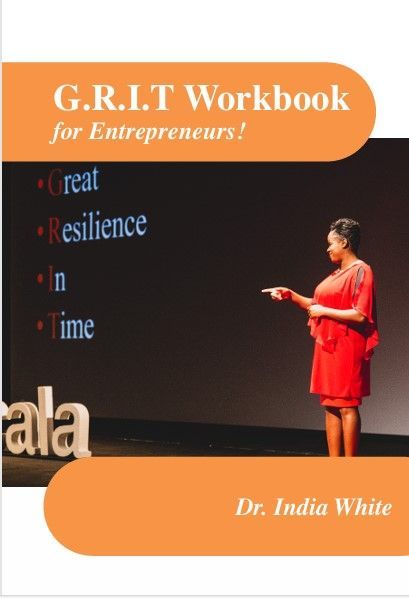
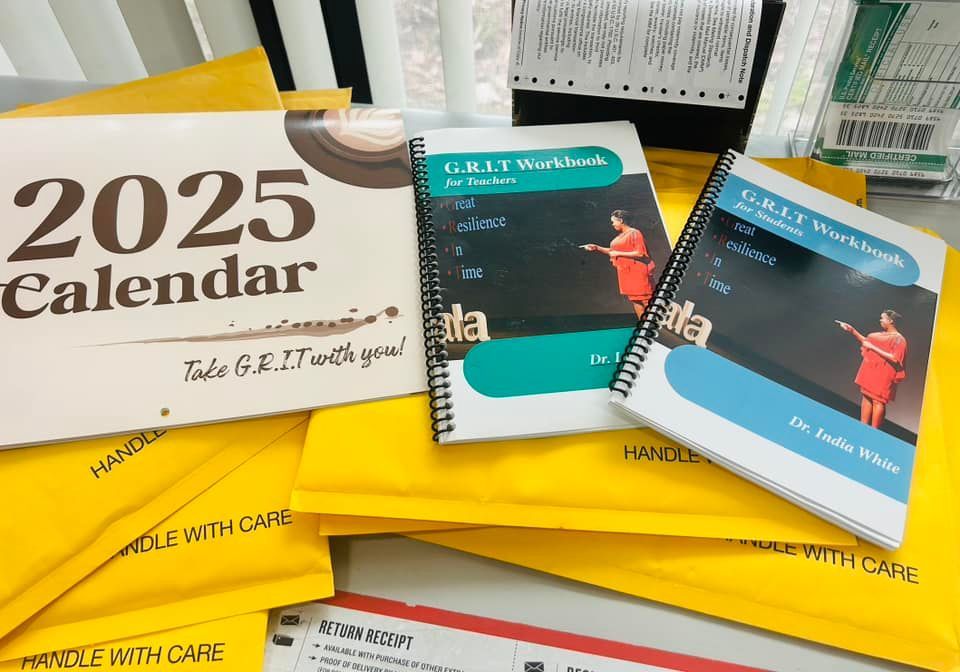
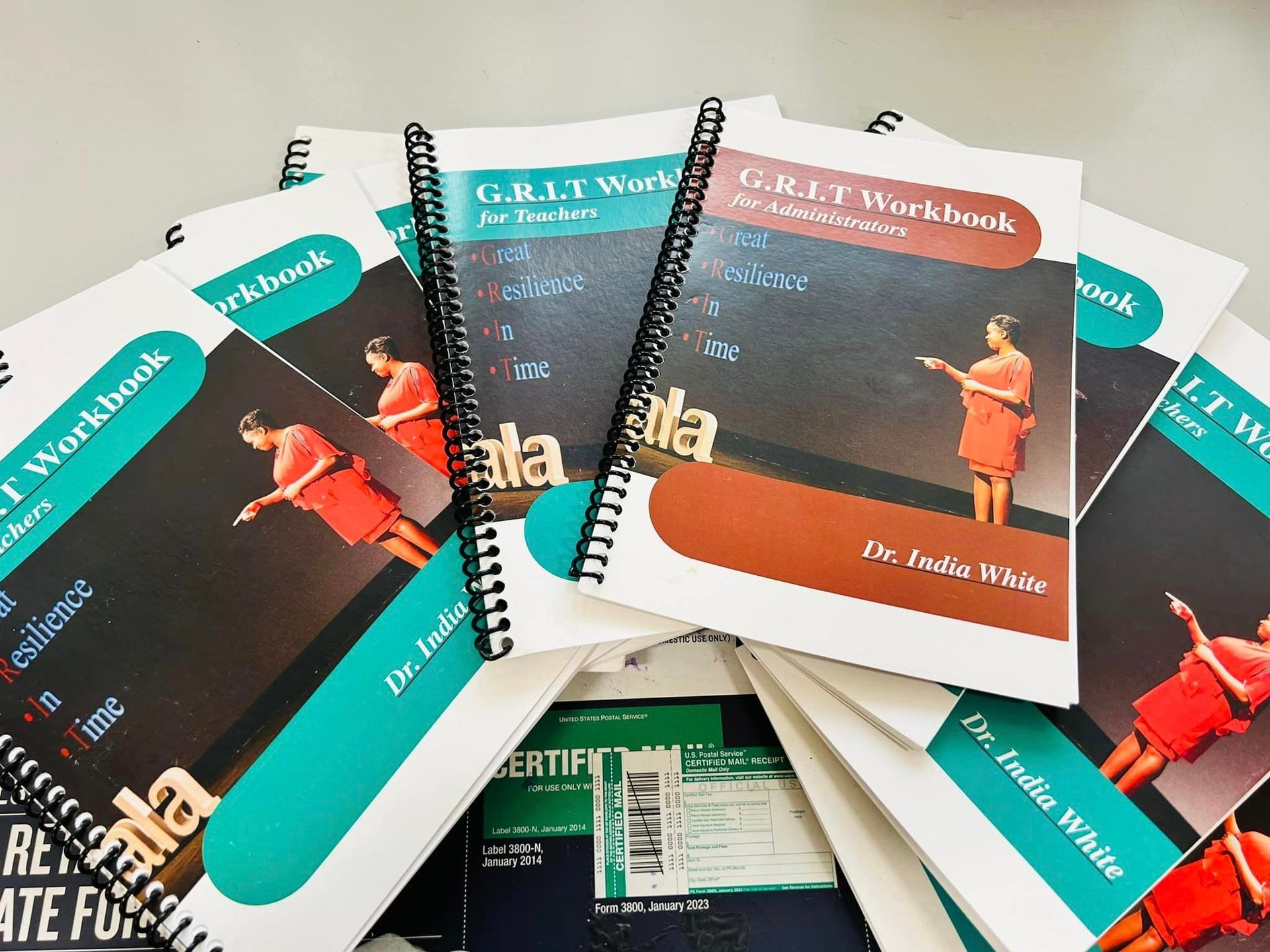
📘 Purchase a G.R.I.T. Workbook
My G.R.I.T. Workbooks are designed to help you:
• Strengthen mental and emotional endurance
• Develop a resilient, growth-focused mindset
• Build confidence through intentional action
• Manage time and energy with purpose
Each workbook is practical, reflective, and applicable to students, educators, leaders, families, and faith communities.
👉 Explore and purchase your G.R.I.T. Workbook at:
www.india-white.com
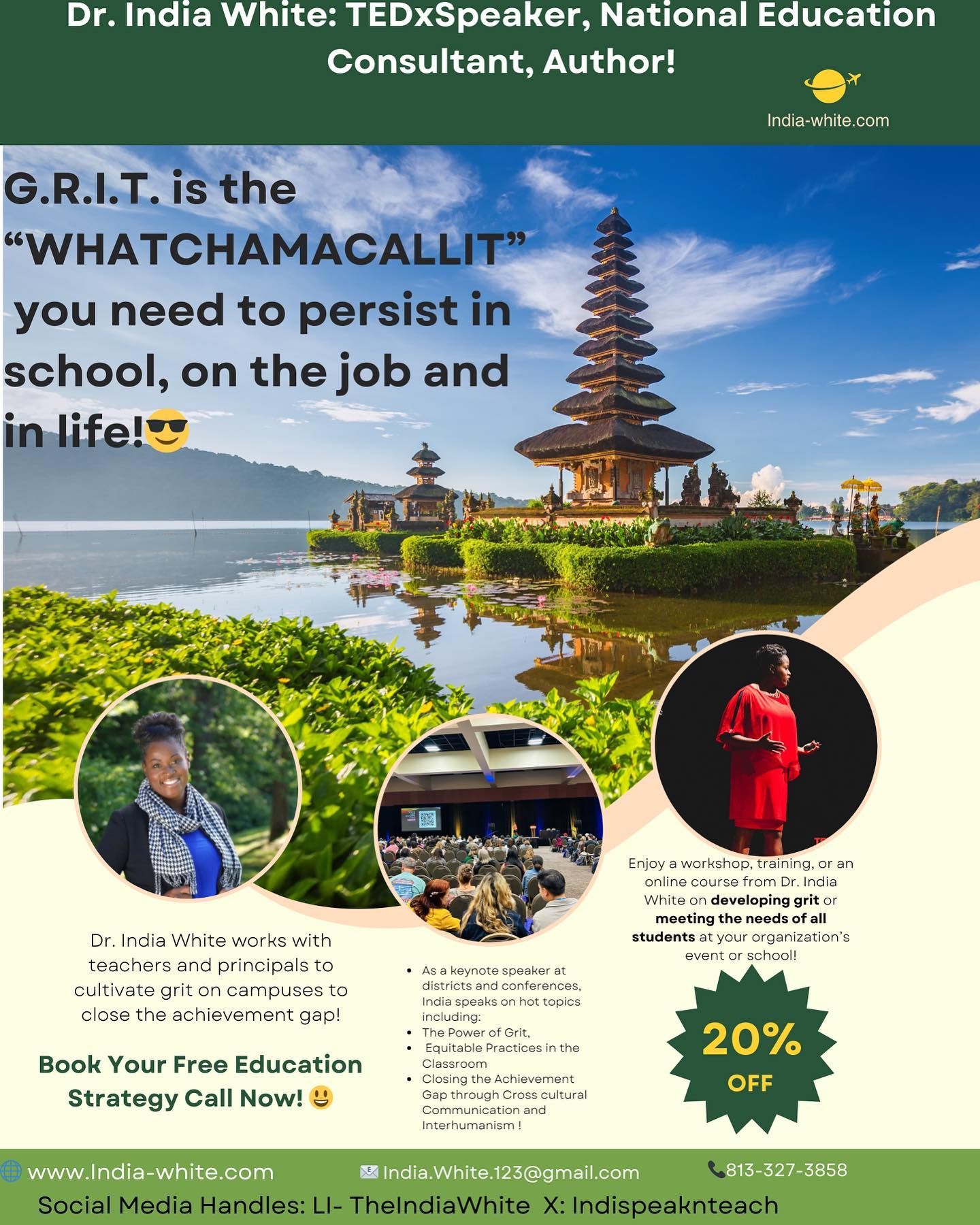
🎤 Book Dr. India White for Gritty Work in 2026
If your school, district, organization, church, or leadership team is ready to cultivate grit in a meaningful and measurable way, I would be honored to partner with you.
Speaking, training, and consulting topics include:
• Building Grit in Leaders and Teams
• Cultivating Resilience in Schools and Classrooms
• Bridging the Achievement Gap Through Grit
• Mental Grit, Well-Being, and Burnout Prevention
• G.R.I.T.-Aligned Vision, Strategy, and Culture
2026 bookings are now open for:
✔️ Keynotes
✔️ Workshops & Professional Development
✔️ Retreats & Leadership Summits
✔️ Virtual and In-Person Engagements
👉 Request booking information or schedule a consultation at:
www.india-white.com
🌱 A Final Word
The new year doesn’t require a new you—it requires a grittier commitment to the growth already within you.
Let’s do the work together.
With purpose and grit,
Dr. India White
Ready to build real grit in 2026?
📘 Grab a G.R.I.T. Workbook or
🎤 Book Dr. India White for gritty leadership, school, or organizational work.
👉 Visit www.india-white.com




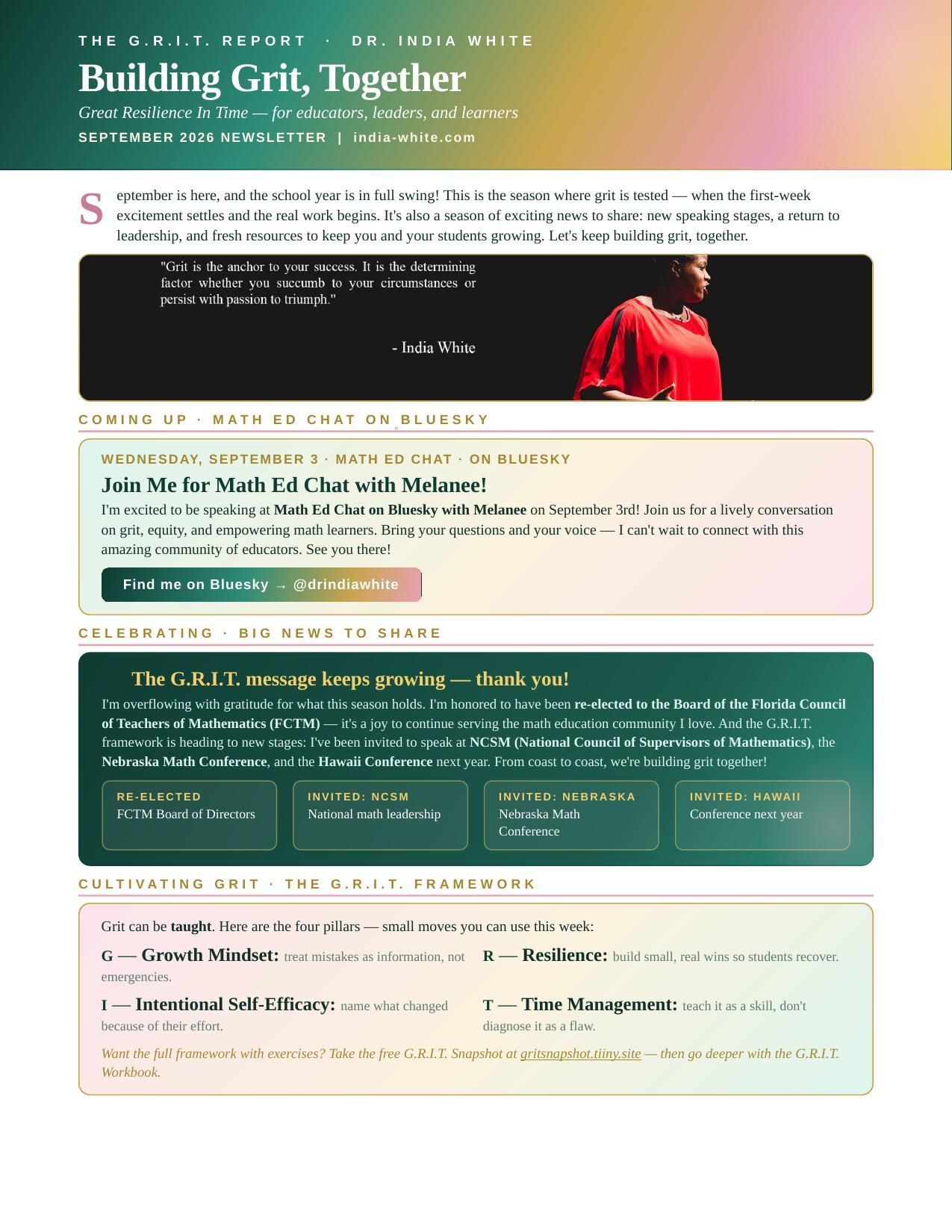
When Real Work Begins, Grit is Here!
My September G.R.I.T. Report is Here!
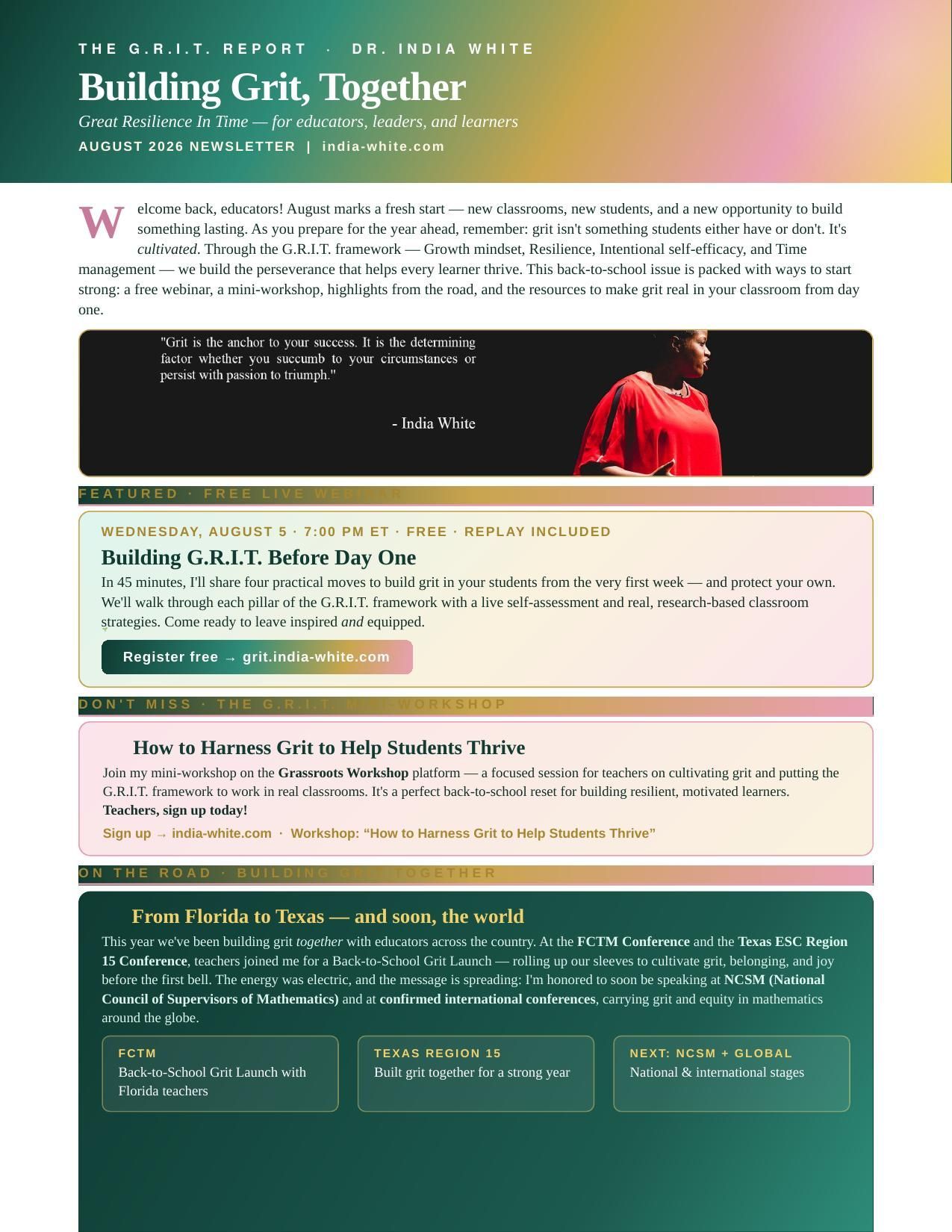
The G.R.I.T. Report!
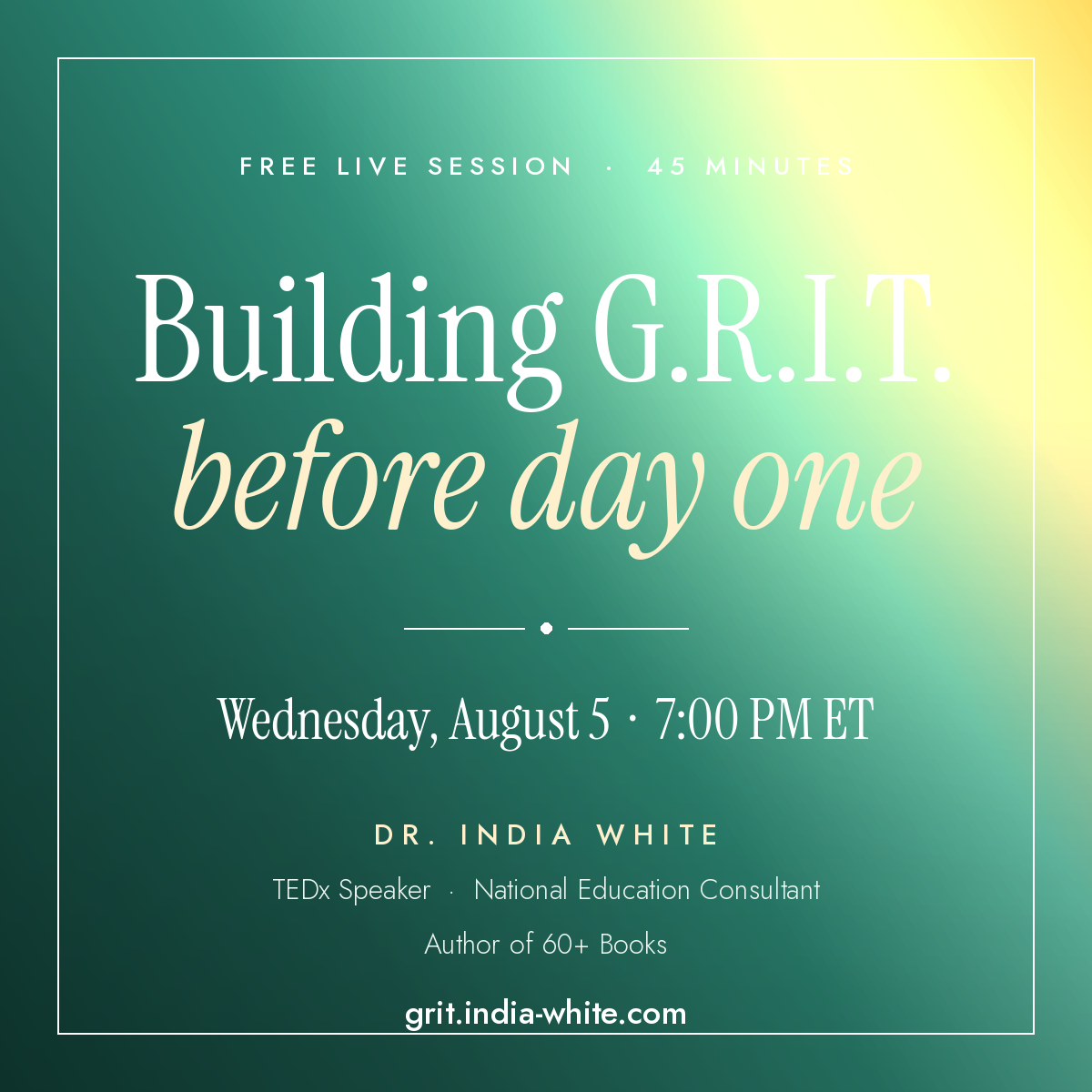
The G.R.I.T. Webinar was Awesome!
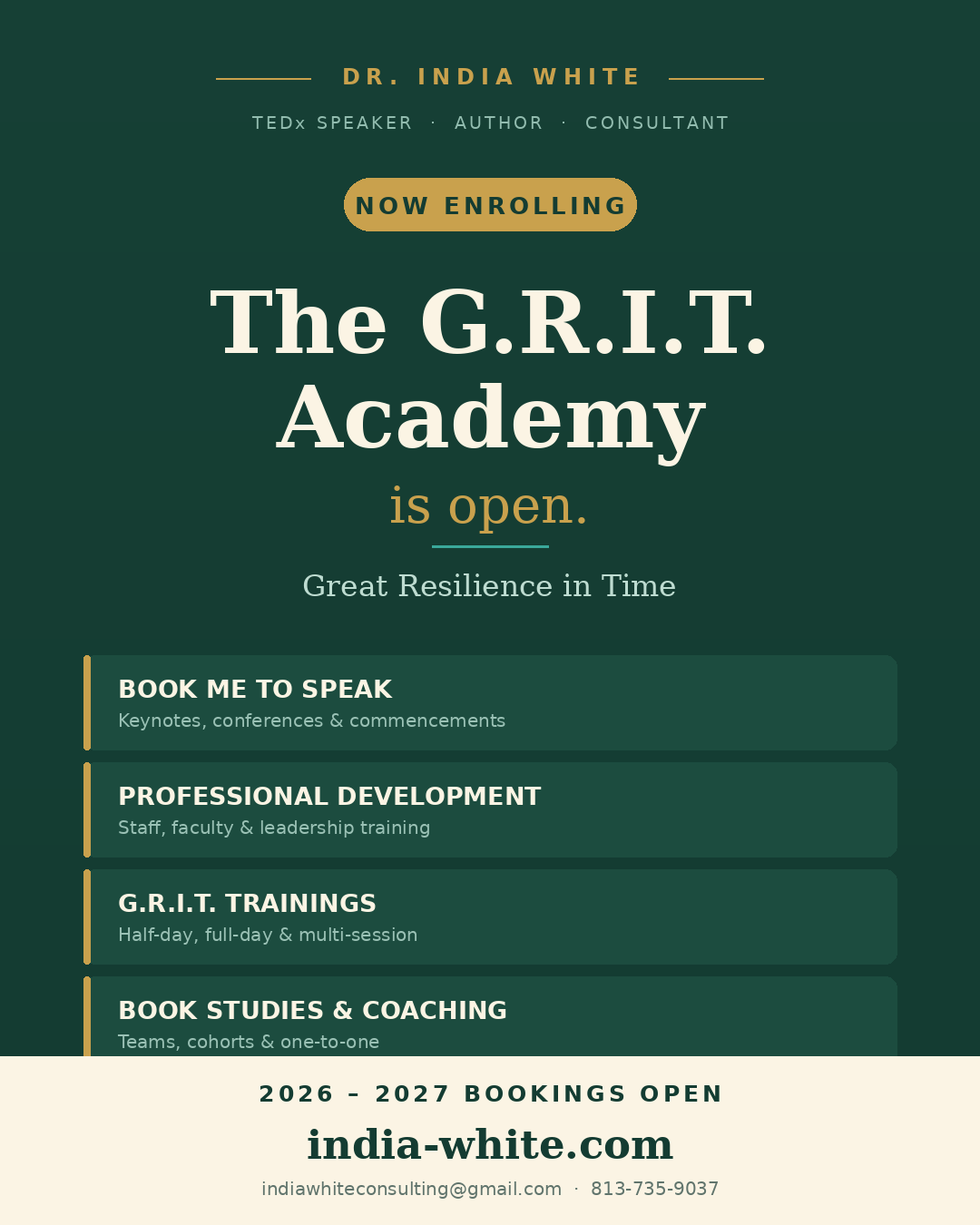
G.R.I.T. Academy- Now Open!

Grateful for Lunch Keynote!

Check out my NEW Grit Life Coaching Workbook!
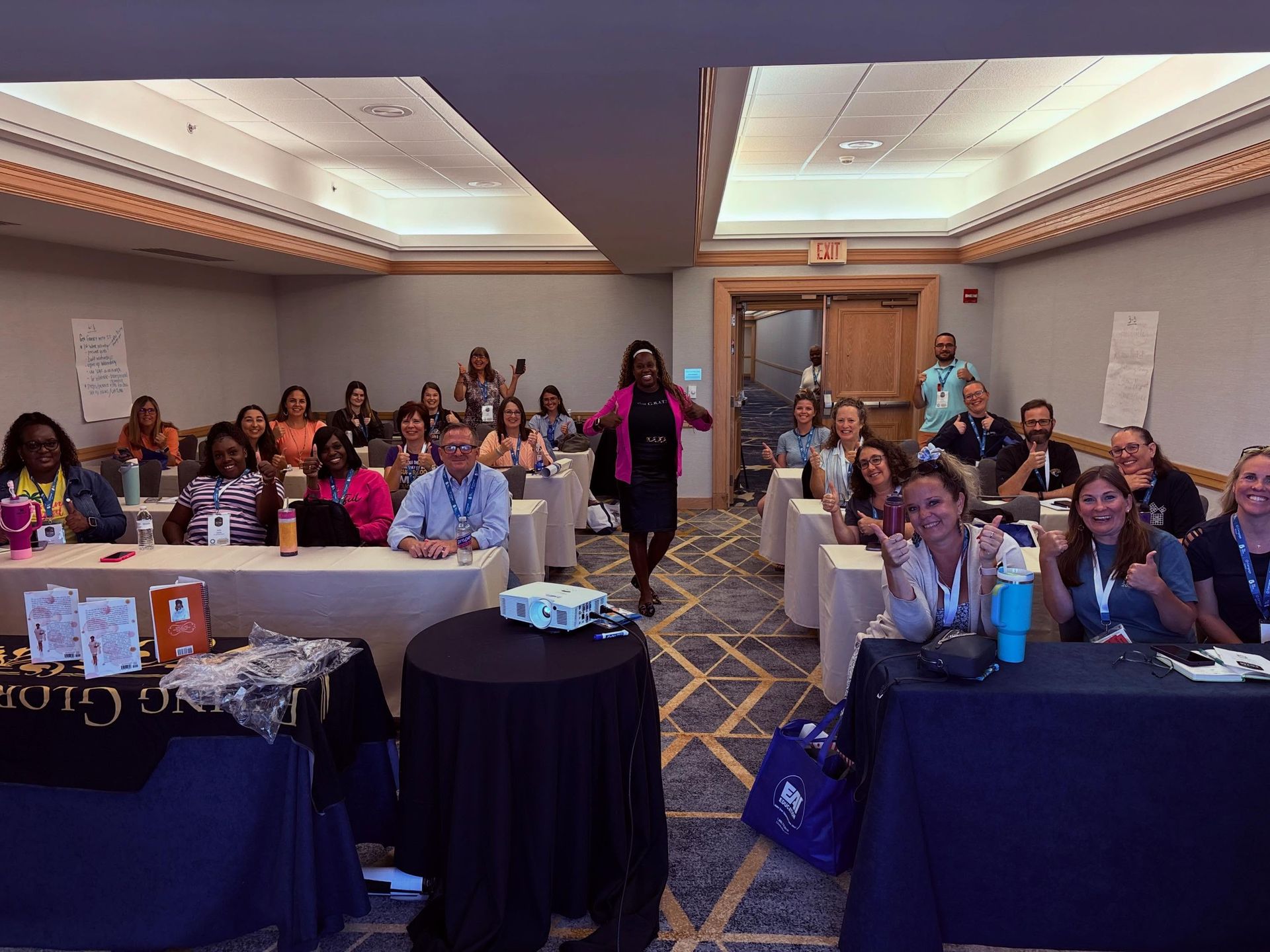
Grateful for GRIT Games!

Excited to Speak at FCTM!!
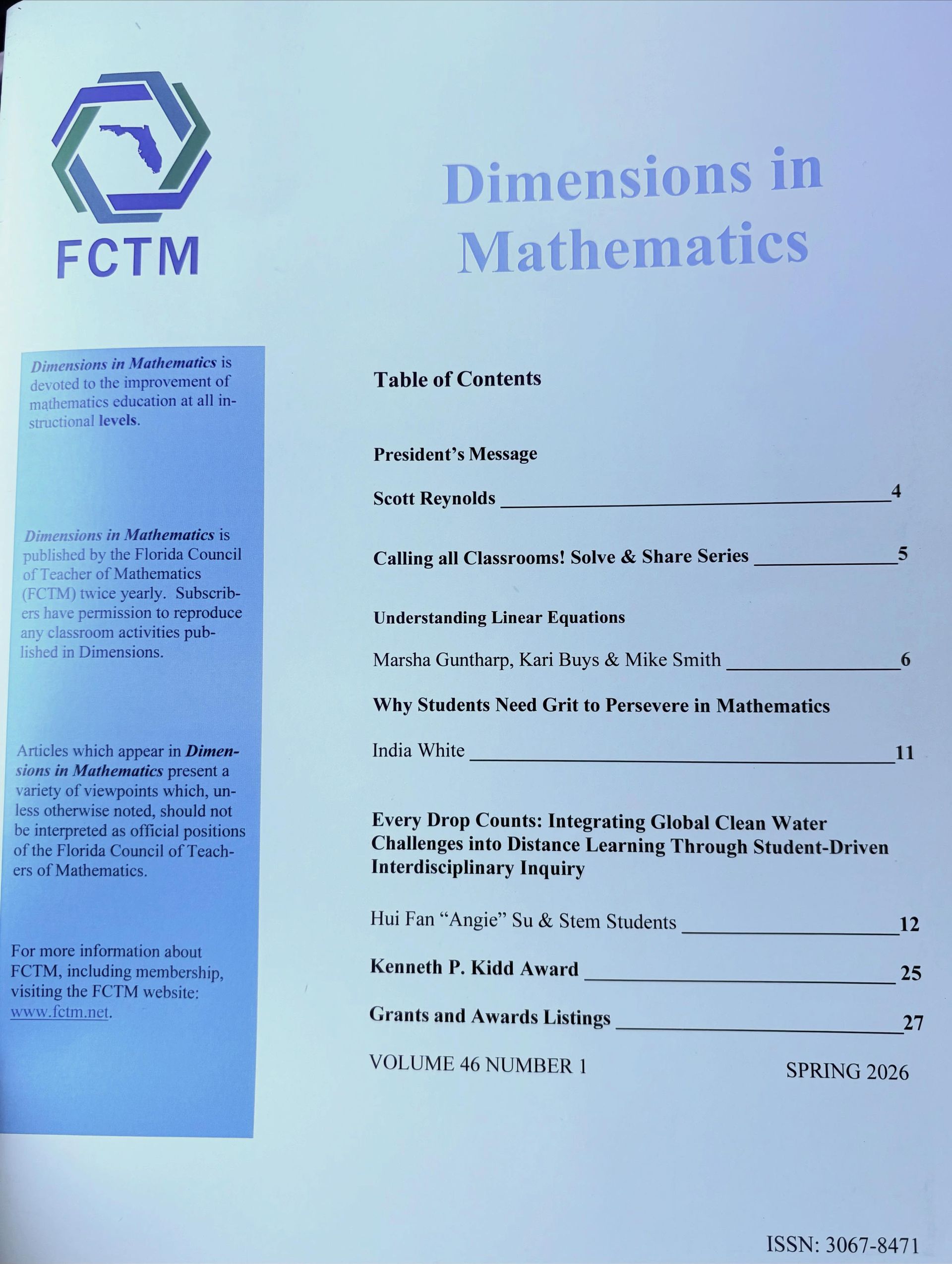
Grateful for the FCTM Dimensions Feature!